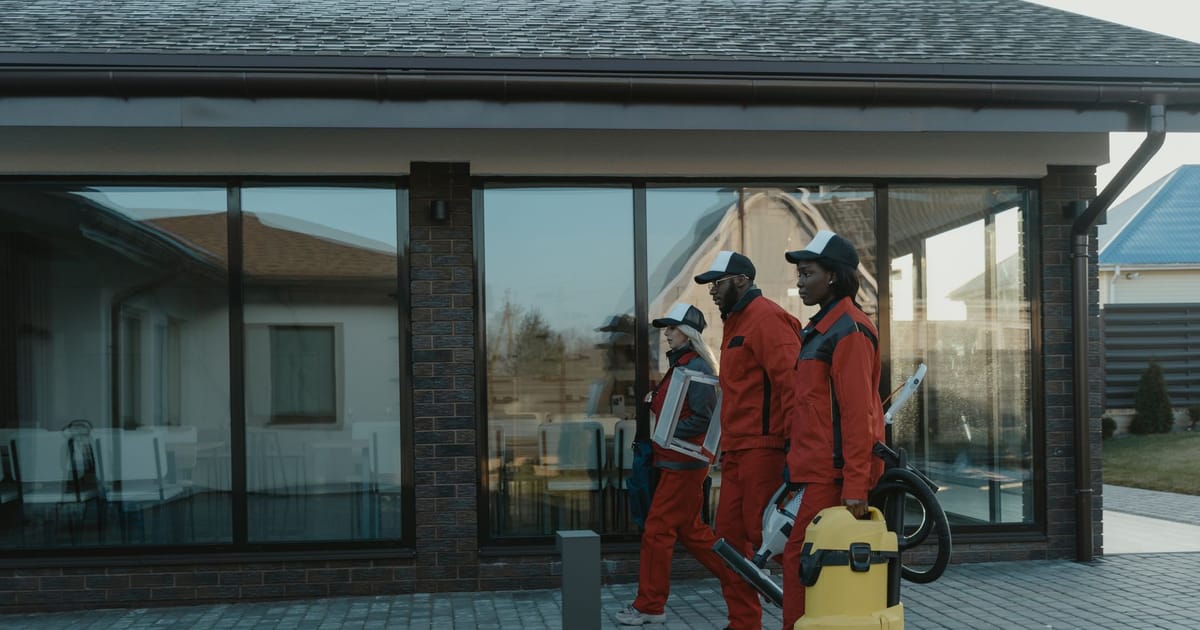
Choosing a cleaning service comes down to three things: confirming the service is properly credentialed, agreeing on exactly what will be cleaned, and making sure you have a clear path to a remedy if something goes wrong. A service that is bonded, insured, and uses background-checked cleaners -- and that will put the scope and guarantee in writing -- is the baseline worth holding out for.
Credentials First: Insurance, Bonding, and Background Checks
Before anything else, confirm that the service carries general liability insurance, workers' compensation insurance, and a surety bond. These are not nice extras. They are the credentials that determine who bears the cost when something goes wrong.
General liability insurance covers accidental damage to your property. If a cleaner knocks over a lamp or scratches a hardwood floor, the service's insurer pays for the repair or replacement. Without it, you are left pursuing the company directly, which is far harder than filing a claim with an insurer.
Workers' compensation insurance matters for a reason many homeowners miss. If a cleaner is injured on your property -- a slip, a fall from a step stool -- workers' comp covers their medical costs and lost wages. If the service carries no workers' comp, an injured cleaner could file a claim against your homeowner's insurance or pursue you personally. Many states require workers' comp for employers with even a small number of employees, but enforcement is inconsistent.
Bonding -- specifically a surety bond -- provides a layer of financial protection tied to honesty claims. If something goes missing, a bond gives you a formal channel for recourse beyond simply hoping the company makes it right.
Ask for proof of all three before you book. A reputable service will produce certificates of insurance and bonding without hesitation. If a company tells you to "just trust us" or says the paperwork is unavailable, that is a meaningful signal.
Background checks are the fourth credential to confirm. ISSA, the worldwide cleaning industry association, emphasizes background-verified staff as a key indicator of service quality. Ask specifically whether the company runs criminal background checks on all employees and whether those checks are repeated periodically. Some agencies run checks once at hire; ongoing screening is a stronger protection.
Confirm Credentials Before You Book
Ask for: (1) a certificate of general liability insurance, (2) proof of workers' compensation, (3) confirmation of bonding, and (4) a description of their background-check process. Get these before you share your address or pay a deposit. A company confident in its credentials will hand them over promptly.
Checking Reviews and Getting Referrals
Credentials confirm that a service is properly set up. Reviews and referrals tell you how the service actually behaves.
Start with the Better Business Bureau (BBB) profile. The BBB records complaints and tracks whether companies resolve them. A pattern of unresolved complaints about missed areas, damage disputes, or difficulty reaching customer service is more informative than an aggregate star rating. A service with a few resolved complaints handled promptly is often a better sign than one with zero reviews and no visible history.
Online reviews on Google and Yelp add volume, but read them critically. Look for specifics -- reviewers who describe what was cleaned, how issues were handled, and how the company communicated. Vague five-star reviews with no detail carry less weight than a specific account of how the company responded when something was missed.
Referrals from people you know are still one of the most reliable inputs. A neighbor who has used the same service for two years and consistently found the results satisfactory is giving you something no review site can: firsthand, repeated experience.
When you check reviews, pay attention to how the company responds to negative ones. A measured, solution-oriented response to a complaint tells you more about customer service quality than a hundred glowing testimonials.
The Written Scope: Getting Expectations on Paper
Vague expectations are the single most common source of disappointment with cleaning services. One person's "thorough clean" is another's "surface wipe." The solution is a written cleaning checklist agreed on before the first visit.
A standard checklist covers kitchen surfaces, sink, stovetop, and appliance exteriors; bathroom fixtures, mirrors, and floors; living area dusting and vacuuming; and bedroom dusting and vacuuming. Anything beyond that -- inside the oven, inside the refrigerator, baseboards, window interiors, ceiling fans, organizing countertops -- should be listed explicitly. If it is not on the list, you cannot reasonably expect it to be done.
Ask the service for their standard checklist and compare it against what you actually need. If there are gaps, negotiate additions before you book, not on the day of service. Some extras carry an additional charge; confirm pricing for each in writing.
A written scope also gives you an objective basis for a re-clean request. If a bathroom mirror was on the checklist and was not cleaned, that is a factual conversation. Without a checklist, the same conversation becomes a dispute over expectations -- which neither party tends to win cleanly.
For context on what a service typically includes by price tier, see How Much Does House Cleaning Cost? and Average House Cleaning Rates in the US: 2024 Data.
The Satisfaction Guarantee
A re-clean guarantee -- an offer to return and fix missed areas at no charge within a defined window, typically 24 to 48 hours -- is a meaningful signal of confidence. It also lowers your risk as a client.
Before you read a guarantee as a selling point, confirm the details. Does it apply to your service type? Some companies offer guarantees on recurring visits but not on one-time or deep cleans. What is the time window? A 24-hour window is tighter than it sounds when the cleaning happens on a Friday afternoon and you notice an issue on Saturday evening. Does the company require photographic evidence of the missed area? That is reasonable, but you need to know before the visit.
A guarantee backed by clear terms is useful. A vague "100% satisfaction" promise on a homepage, with no documented process for claiming it, is marketing copy.
Who Supplies Products and Equipment
Confirm before the visit whether the service brings its own supplies and equipment or expects you to provide them. Most agency-based cleaning services bring their own products and equipment; many independent cleaners do as well, though practices vary.
This affects two things: cost and product preferences. If the service supplies products, confirm what they use. If you have sensitivities to fragrance, a preference for non-toxic or plant-based cleaners, or specific requirements for certain surfaces -- stone countertops, hardwood floors, stainless steel appliances -- communicate those preferences before the visit.
If you supply your own products, confirm that the cleaner is familiar with the surfaces and products in your home. Expecting a cleaner to use an unfamiliar product on an expensive surface without prior discussion is a risk for both sides.
Agency vs. Independent Cleaner
One structural decision shapes most of the others: whether you hire through a cleaning agency or hire an independent cleaner directly. Each has real trade-offs.
Agencies typically vet, insure, and manage their cleaners. If a cleaner calls in sick, the agency sends a replacement. The service is more consistent and carries more institutional accountability. You typically pay more for that structure -- and see Independent Cleaner vs Cleaning Agency: Comparing Your Options for a full breakdown of how the trade-offs work in practice.
Independent cleaners often cost less, and many develop a personal familiarity with your home over time that an agency rotation cannot match. The verification burden falls on you: confirming their insurance, checking references individually, and handling scheduling gaps yourself when they are unavailable.
Neither is universally better. The right choice depends on what you value more -- accountability and convenience, or lower cost and a personal relationship.
Recurring vs. One-Time Terms and Cancellation Policy
Clarify the booking structure before you commit. Recurring cleaning contracts -- weekly, biweekly, or monthly -- often come with an introductory rate that reverts to a higher standard rate after a trial period. Confirm what the ongoing rate is and when it kicks in.
Ask about the cancellation policy. Some services require 24 to 48 hours' notice to avoid a cancellation fee; others charge a fee if you cancel a recurring booking too frequently. A reasonable policy is not a red flag -- inflexibility or a fee structure that makes it difficult to pause service is.
If you are uncertain about committing to recurring service, ask whether a trial visit is available and whether the pricing changes meaningfully between a one-time booking and a recurring schedule. Many services offer a lower per-visit rate on recurring plans, which is straightforward.
The Walk-Through or Consultation
For larger homes, first-time bookings, or situations with specific requirements, a walk-through before the first visit is worth requesting. A walk-through lets the service assess the actual scope of the work -- square footage, surface types, condition of the home, any areas to avoid -- and give you a more accurate quote.
It also gives you an opportunity to assess the service's communication and professionalism before anyone enters your home with cleaning equipment. If the estimator is disorganized, difficult to reach, or dismissive of your questions during a sales conversation, that is a preview of how the service will handle issues later.
Not every service offers walk-throughs, and for a standard apartment or small home the scope is usually clear enough from a phone conversation. But for complex jobs -- post-renovation cleaning, a first deep clean of a neglected space, a home with specific surface requirements -- a walk-through reduces the likelihood of surprises on both sides.
For guidance on what to do between the consultation and the visit, see How to Prepare for a House Cleaner: A Pre-Visit Checklist.
Red Flags: What to Watch For
Most cleaning experiences go well when you do basic preparation. But a handful of warning signs reliably indicate a service worth avoiding.
No insurance or bonding. A service that cannot produce documentation is operating without the safety net that protects you and its own workers. This is the single most important check.
Cash-only with no receipt. Cash payment is not inherently problematic, but a service that demands cash and provides no documentation of the transaction is giving you no paper trail if a dispute arises.
No written scope. If a service resists putting the cleaning tasks in writing, the risk of unmet expectations is high. Verbal agreements about what "a full clean" includes are almost always interpreted differently by both parties.
Vague or pressure-based pricing. A service that cannot explain how it prices -- by square footage, by hourly rate, by a flat project rate -- or that applies pressure to book before providing a clear number is not operating transparently. See Hourly vs Flat-Rate Cleaning for help interpreting pricing structures.
High-pressure sales tactics. A service that tells you the price will increase if you do not book today, or that implies you have no reasonable alternatives, is applying leverage that reputable companies do not need.
Red Flags That Signal You Should Walk Away
If a service cannot provide insurance certificates, insists on cash with no receipt, refuses to provide a written cleaning scope, or uses high-pressure tactics to push you toward a booking -- find a different provider. These are not minor inconveniences. They are structural problems that become costly after something goes wrong.
A Quick-Reference Checklist
The table below summarizes the key factors, what to look for in each, and what the corresponding red flag looks like.
| Factor | What to look for | Red flag |
|---|---|---|
| Insurance and bonding | Certificates of liability insurance, workers' comp, and bonding provided on request | Cannot produce documentation; says "we're covered" without proof |
| Background checks | All staff checked before hire; company states whether checks are periodic | No policy stated; deflects the question |
| Scope of work | Written checklist agreed on before the visit; extras priced separately | Verbal only; "we do everything" with no specifics |
| Satisfaction guarantee | Re-clean within 24-48 hours; documented process for claiming it | Vague "satisfaction guaranteed" with no stated process |
| Reviews and BBB | Specific reviews; BBB profile showing how complaints are resolved | No verifiable reviews; unresolved BBB complaints |
The Baseline Before You Book
At minimum, confirm: (1) written proof of liability insurance, workers' comp, and bonding; (2) background-checked staff; (3) a written cleaning checklist; and (4) a re-clean guarantee with documented terms. Secure cash, valuables, and prescription medications before any new person enters your home -- this is good practice regardless of the service.
A reliable cleaning service is not hard to find when you know what to look for. The vetting process described here typically takes one or two phone calls and a brief email exchange. Done before the first visit, it removes most of the common sources of disappointment -- and gives you a clear path to a resolution if something is not right.
Frequently asked questions
How do I know if a cleaning service is legitimate?
Ask for proof of general liability insurance, workers' compensation coverage, and bonding before you book. A legitimate service will provide documentation without hesitation. Check their Better Business Bureau profile for complaints and look for a physical business address. Vague pricing, cash-only payment demands, and no written scope are warning signs worth taking seriously.
What is the difference between a bonded and insured cleaning service?
Insurance covers accidental damage to your property -- a broken lamp, a scratched floor. A surety bond provides a layer of protection against theft claims. Both are separate protections, and a reputable cleaning service carries both. Workers' compensation is a third credential that protects you from liability if a cleaner is injured in your home.
Should I be home during the cleaning?
You do not have to be, but for a first visit it is worth considering. Being present lets you walk the cleaner through your priorities, point out surfaces that need special attention, and confirm the scope was followed. After a few visits, once trust is established, most clients choose not to be home.
What should a cleaning checklist include?
A standard cleaning checklist covers kitchens (counters, sink, stovetop, exterior of appliances, cabinet fronts), bathrooms (toilet, tub, shower, sink, mirrors), living areas (dusting, vacuuming, mopping), and bedrooms (dusting, vacuuming, linens if requested). Anything outside that list -- inside oven, inside refrigerator, windows -- should be agreed on in writing before the visit.
What is a re-clean guarantee and how does it work?
A re-clean guarantee means the service will return within a stated window -- usually 24 to 48 hours -- to correct any missed areas at no additional charge. To use it, you typically need to identify the issue and contact the company within that window, sometimes with a photo. Confirm the guarantee covers your service type before you book, since some companies exclude one-time or deep cleans.