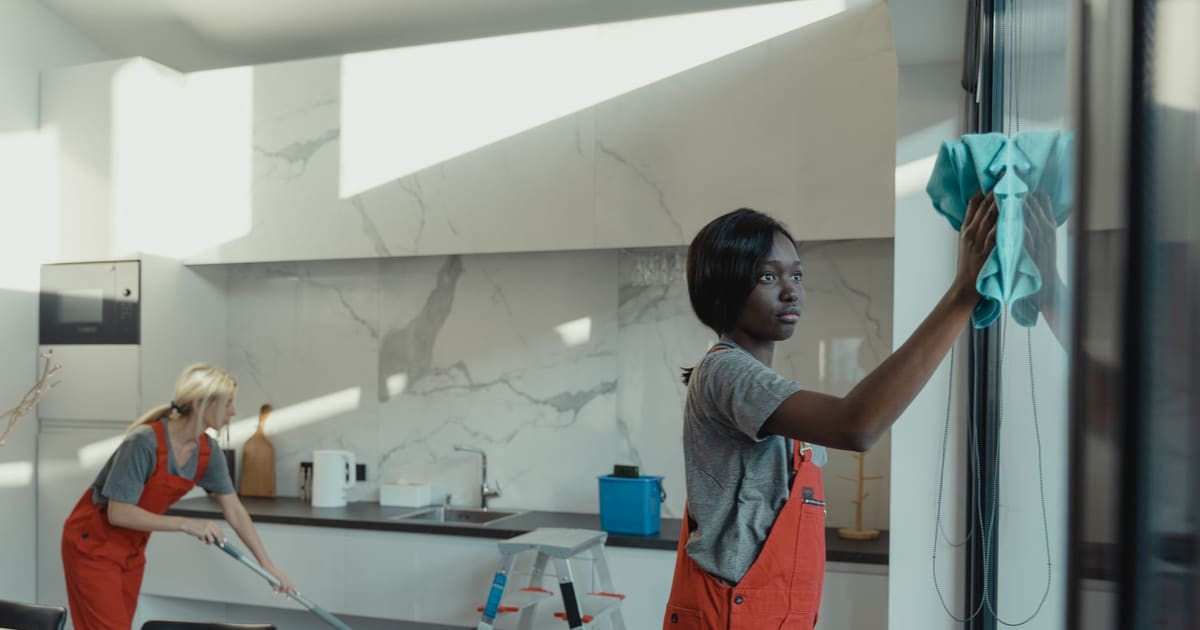
Over 65 percent of US households include at least one pet, according to the American Pet Products Association's 2023-2024 National Pet Owners Survey. Professional cleaning services enter nearly all of those homes at some point, and the products they use matter. The majority of standard cleaning visits are safe for pets when basic precautions are followed -- but knowing which products present real risks, what to ask before booking, and how to prepare your home reduces the chance of a problem.
Which common cleaning products are harmful to pets?
The ASPCA Animal Poison Control Center and veterinary toxicology literature identify several categories of common cleaning chemicals as potential hazards for dogs and cats:
Quaternary ammonium compounds (quats). Found in many commercial disinfectants and surface sprays marketed as antimicrobial. The risk is primarily respiratory irritation and, in high concentrations, chemical burns to mucous membranes. Cats and dogs that walk across recently treated floors and groom their paws can ingest residue.
Chlorine bleach. Direct contact with high concentrations causes irritation to skin, eyes, and respiratory tract. Diluted bleach (the concentrations used in routine cleaning) is far less hazardous but still warrants ventilation and keeping pets away until surfaces dry. Mixing bleach with ammonia-based products releases chloramine gas -- genuinely toxic, not a minor concern.
Pine oil-based cleaners. Some traditional floor cleaners use pine oil, which is toxic to cats specifically -- cats cannot metabolize it effectively due to a deficiency in certain liver enzymes. This applies to both direct contact and inhalation during application.
Phenolic compounds. Found in some concentrated disinfectants. Toxic to cats at relatively low doses.
Essential oils in cleaning products. Tea tree, eucalyptus, and cinnamon oils are commonly added to "natural" cleaning products as antimicrobials or fragrances. All three appear on veterinary lists of compounds toxic to cats and, at sufficient concentrations, to dogs.
The practical takeaway is not that professional cleaning is dangerous to pets -- it is that knowing what your service uses allows you to flag ingredients that warrant extra ventilation time or a product swap.
What pet-safe and non-toxic labels actually mean
Labels like "pet-safe," "non-toxic," and "natural" have no legally defined standard in the US for cleaning products. A product can be marketed as pet-safe while containing ingredients that veterinary toxicology sources flag as problematic.
More useful than a label is an ingredient list. Products certified under the EPA's Safer Choice program have been evaluated for reduced toxicity to aquatic organisms and wildlife, with specific screening for surfactants and solvents -- though pet-specific safety data is not part of the certification. Green Seal GS-37 certified products have similar scrutiny on ingredient transparency.
For households with pets, the most reliable approach is asking your service for the specific products they use and looking those up, or requesting that they use products you supply and approve. Most services will accommodate supply preferences with advance notice.
Questions to ask a cleaning service about their products
Before booking with any service for the first time, ask:
- What cleaning products do you use as your standard kit?
- Do you use any disinfectants with quaternary ammonium compounds or chlorine bleach?
- Can I request that you use fragrance-free or specific non-toxic products? Is there an extra charge for this?
- What is your standard practice for ventilation during and after cleaning?
- If I provide my own products, will your team use them?
A service that cannot answer these questions, or that dismisses them, is telling you something about how they operate. Reputable services keep track of what is in their kits for exactly this reason -- workers handle these products daily and have their own health interest in knowing.
How to prepare your home for a cleaning visit when you have pets
Good preparation protects both your pets and the cleaning crew. Some animals become anxious around unfamiliar people and equipment; a stressed dog or cat can also create hazards for workers trying to clean.
Before the crew arrives:
- Move pets to a room not being cleaned, a crate, or an outdoor area if weather permits
- Block access to rooms where cleaning products will be applied to floors, until surfaces dry
- Put away pet food and water bowls from areas being cleaned -- chemicals applied to counters and floors near bowls can contaminate them
- Remove or secure pet toys that might obstruct cleaning or absorb product residue
During the visit:
- Ask the crew to work from furthest-from-exit rooms toward the door so pets in a crate near the exit are exposed to the least traffic
- If a pet becomes distressed, moving them to the car or outside during peak cleaning is reasonable
After the visit:
- Ventilate cleaned rooms for at least 30 to 60 minutes with open windows before allowing pets back in
- If floors were mopped, wait until they are fully dry -- this is when paw grooming risk is highest
Pet hair and odor: what professional cleaners can and cannot remove
This is an area where homeowner expectations and realistic outcomes sometimes diverge.
What professional cleaning handles well:
- Pet hair from floors, including carpet: standard vacuuming and hot water extraction remove the majority of hair and surface dander
- General pet odors from routine use: hot water extraction with proper drying removes embedded odors from carpet fibers in most cases
- Pet hair from upholstery: standard cleaning addresses surface hair; deep-set hair requires specialized attachments
What requires additional treatment or has limits:
- Urine odors: deep-set urine in carpet requires enzyme pre-treatment (typically $20 to $50 per area) to break down the compounds chemically rather than extract them mechanically
- Urine-saturated padding: if urine has penetrated through the carpet into the padding below, extraction alone does not solve the problem -- padding replacement is the only complete fix and is outside standard cleaning scope
- Dander as an allergen: vacuuming reduces surface dander but does not eliminate it from the home's air system; HVAC filter replacement and air duct cleaning address the airborne component
For severe pet urine situations, it is worth reading the carpet cleaning cost guide for specifics on enzyme treatment pricing and when padding replacement is warranted.
The extra cost of pet-related cleaning add-ons
Pet households typically incur modest cost premiums above equivalent pet-free homes. According to service-platform rate data from HomeAdvisor and Angi, common add-ons in pet households include:
- Pet hair surcharge: $15 to $30 per visit for heavy shedders. Not all services charge this separately; some factor it into an elevated base rate.
- Enzyme pre-treatment for urine: $20 to $50 per affected area. Required for severe odors; optional for light odors.
- Deodorizing treatment: $10 to $40 per room for general pet odor beyond what extraction handles alone.
- Product swap (service using your specified products): typically no extra charge if you supply the products; some services charge a small convenience fee if you require specific fragrance-free formulas they do not carry.
Green and enzyme-based cleaners: a better option for pet households
Enzyme-based cleaning products, which use biological enzymes to break down organic matter (including pet waste, urine, and dander), are generally considered lower-risk in pet households than chemical disinfectants. They are effective on the specific problem of pet odors and stains, and they do not rely on the categories of compounds most associated with pet toxicity.
Plant-derived, fragrance-free surfactants (the cleaning agents in most dish soaps and many "eco-friendly" cleaners) are also well-tolerated by most pets once diluted and surfaces dry. They lack the antimicrobial potency of disinfectants but are appropriate for routine household cleaning where sanitation is not the primary goal.
For more context on what green cleaning actually costs and what the certifications mean, see green cleaning service cost.
After the cleaner leaves: ventilation and re-entry timing
The general guidance -- open windows and wait 30 to 60 minutes before allowing pets back into cleaned areas -- covers most scenarios. A more precise approach by product type:
- Enzyme cleaners and plant-based surfactants: surfaces are safe once dry, typically 15 to 30 minutes
- Standard commercial all-purpose cleaners: allow full drying, approximately 30 minutes with ventilation
- Disinfectants containing quats or bleach-based products: 30 to 60 minutes minimum with active ventilation (open windows, fan running); until fully dry for floor surfaces where paw contact is likely
- Freshly mopped hard floors: always wait until fully dry regardless of product; floor-surface grooming risk is highest in the damp period
If you have a cat and any pine-oil or phenolic disinfectant was used, wait longer and confirm full drying before re-entry. Cats are more sensitive to these compounds than dogs and will groom residue off their paws without noticing.
Ask for a Product Sheet Before the First Visit
Before booking a service for the first time with pets in the home, ask them to send a list of products they use or the product names so you can review them. This is a normal request and takes two minutes. Most services that work in pet households regularly have already fielded this question and can answer it quickly. If a service cannot tell you what is in their cleaning kit, that is worth noting when comparing options.
Keep Pet Food and Water Away from Cleaned Surfaces
Cleaning products applied to counters, floors, or surfaces near food and water bowls can contaminate them through residue or runoff. Before a cleaning visit, move pet food bowls, water bowls, and any food stored on accessible counters to a room not being cleaned, or into a closed cabinet. Return them only after the cleaned surfaces are completely dry and ventilated.
Frequently asked questions
Are cleaning service products safe for dogs and cats?
Standard commercial cleaning products used by most services are generally safe once dry and surfaces are ventilated. The risk period is during and immediately after application, when volatile compounds are concentrated in the air. The most problematic ingredients for pets are certain quaternary ammonium compounds, chlorine bleach, and some pine-oil-based disinfectants. Ask your service what they use before booking.
How long should pets stay out of a room after cleaning?
For most standard cleaning products, 30 to 60 minutes of ventilation with open windows is sufficient before pets re-enter. For stronger disinfectants or products applied to floors pets walk on and may groom off their paws, waiting until surfaces are fully dry -- typically two to four hours -- is more conservative and appropriate for households with cats or small dogs.
Can professional cleaners remove pet urine odors from carpet?
Hot water extraction removes surface-level and most embedded pet odors from carpet. Severe or recurring urine odors require enzyme pre-treatment, typically $20 to $50 per affected area, which breaks down the odor compounds rather than masking them. Very severe cases where urine has saturated the padding beneath the carpet may require padding replacement, which is a separate cost outside cleaning scope.
What should I tell a cleaning service about my pets before they arrive?
Tell them the type and number of pets you have, whether any pets will be present during the visit, whether there are known accident areas on carpet or upholstery, whether you have product preferences (fragrance-free, non-toxic), and where pets are restricted or crated during cleaning. This information helps the service bring appropriate products and plan the visit.
Are natural cleaning products safer for pets?
Generally yes, particularly fragrance-free enzyme-based and plant-derived formulas with no quaternary ammonium compounds or chlorine bleach. However, some 'natural' products still contain essential oils like tea tree or eucalyptus that are toxic to cats. Safer does not mean the same as safe -- ask for an ingredient list rather than relying on labels like 'natural' or 'eco-friendly.'
Does having pets make cleaning services cost more?
Pet households typically cost more to clean because pet hair requires extra vacuuming time and pet odors may require enzyme pre-treatment. Expect a modest premium of $15 to $30 per visit above a pet-free equivalent, plus any explicit add-ons like carpet enzyme treatment. Some services do not charge extra for light pet hair, but heavy shedders or multiple pets usually add to the quote.