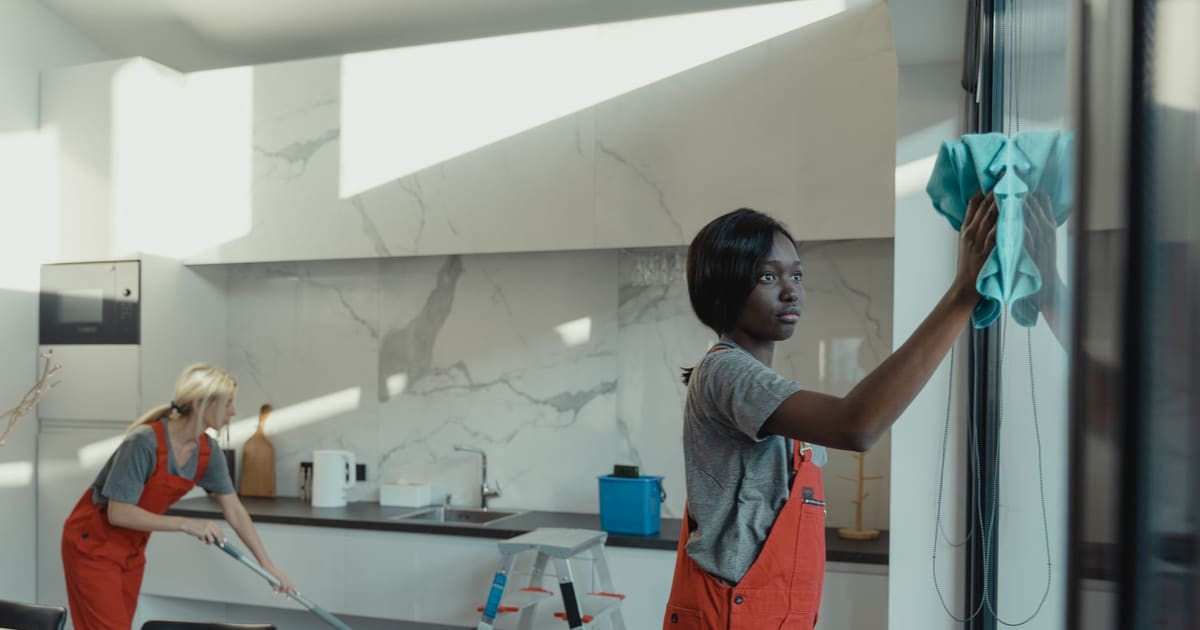
Professional cleaning can meaningfully reduce the indoor allergen load in most homes. Dust mites, pet dander, mold spores, and pollen all accumulate in carpets, upholstered furniture, bedding, and on surfaces throughout the house. A well-equipped professional cleaning service, using the right tools and products, removes these deposits more effectively than most household cleaning routines.
The key word is "well-equipped." Not every cleaning service uses a HEPA-filtered vacuum, fragrance-free products, or techniques optimized for allergen removal. Knowing what to ask for -- and how to evaluate whether a service delivers it -- makes the difference between a cleaning that helps and one that does not.
For severe or medically managed allergies, discuss your cleaning routine with your allergist or immunologist
This guide describes general cleaning practices that can help reduce common indoor allergens. It is not medical advice. People with severe asthma, allergic rhinitis, or other diagnosed respiratory conditions should discuss home management strategies with their treating clinician, who can provide guidance specific to their triggers and health situation.
How Professional Cleaning Can Reduce Common Indoor Allergens
Indoor allergens are particles that trigger immune responses in sensitized individuals. The most common are:
- Dust mite allergen: proteins shed by dust mites and found in their waste particles, which accumulate in soft furnishings, carpets, and bedding
- Pet dander: microscopic skin flakes shed by cats, dogs, and other animals with hair or feathers; extremely lightweight and stays airborne for extended periods
- Mold spores: produced by mold colonies in humid environments; common in bathrooms, basements, and around windows with condensation
- Pollen: tracked indoors on clothing and shoes; settles on horizontal surfaces and in carpet
Professional cleaning addresses all four through physical removal. A HEPA-filtered vacuum removes mite allergen and dander from carpet and upholstery. Microfiber cloths used damp trap and remove surface dust rather than redistributing it. Regular removal of settled pollen from surfaces and floors prevents it from re-entering the air.
What professional cleaning cannot do is eliminate the source. If a cat lives in the home, dander will continue to accumulate between cleanings. If the bathroom has a persistent humidity problem, mold will return. Professional cleaning manages allergen load; source control addresses the underlying issue.
What Allergens Accumulate Fastest and Where to Find Them
Knowing where allergens concentrate helps you direct professional cleaning effort effectively.
Carpets and rugs are the single largest reservoir for dust mite allergen in most homes. Mites thrive in the warm, humid microclimate of carpet pile and feed on shed skin cells. A square yard of carpet can harbor hundreds of thousands of mites under favorable conditions. Regular professional hot water extraction -- not just vacuuming -- is the most effective mechanical method for reducing mite populations and removing allergen deposits. Our carpet cleaning cost guide covers what professional carpet extraction involves and what it typically costs.
Upholstered furniture collects dander and mite allergen at similar rates to carpet. Cushions, arm covers, and throw pillows are particularly dense accumulation sites. Professional upholstery cleaning addresses these deposits in ways that surface vacuuming does not reach.
Bedding and mattresses deserve separate attention. Professional cleaning services typically do not clean mattresses as part of a standard home clean -- it requires a specific service. If dust mite allergen is a significant concern, a professional mattress cleaning every one to two years addresses one of the most direct exposure points.
Hard surfaces and baseboards collect settled pollen and dander. These are addressed by regular dusting with microfiber cloths, which trap particles rather than redistributing them.
HVAC filters and air vents accumulate particles that are then redistributed when the system runs. Changing HVAC filters regularly -- ideally to MERV-11 or higher rated filters -- is a maintenance task you control between professional cleaning visits.
HEPA Vacuum Filters: Why They Matter and Which Services Use Them
The vacuum filter is one of the most important equipment specifications for allergy-sensitive households. Here is why it matters in practice.
A standard vacuum picks up visible dirt and larger particles from carpet and floors. Smaller particles -- allergen-carrying dust mite feces, pet dander, and fine pollen -- pass through non-HEPA filters and are blown out through the exhaust into the room air. The act of vacuuming can actually increase airborne allergen levels in the short term when a non-HEPA vacuum is used.
A true HEPA filter -- rated to capture 99.97 percent of particles at 0.3 microns or larger -- prevents this. Particles are trapped in the filter and not recirculated. After vacuuming with a true HEPA unit, allergen levels in the room drop as particles are removed.
When evaluating cleaning services, ask these specific questions about their vacuum:
- "Do your vacuums use true HEPA filters?" (Accept yes only with the 99.97% / 0.3 micron specification, not "HEPA-style" or "HEPA-like")
- "How frequently are HEPA filters replaced?" (HEPA filters lose effectiveness when overloaded; reputable companies replace them on schedule)
- "Do you have a separate vacuum for homes with pets?" (Pet hair and dander can clog filters faster, and a dedicated unit avoids cross-contamination)
Fragrance-Free and Low-VOC Products: What to Ask For
Cleaning product fragrances are among the most common non-allergen irritants in household environments. They are not allergens in the strict immunological sense, but they trigger respiratory symptoms -- sneezing, congestion, throat irritation, and in people with asthma, potentially serious symptoms -- in a significant portion of the population.
Conventional cleaning products also contain volatile organic compounds (VOCs) that off-gas after application and can irritate airways. Some VOCs are present even in products labeled as "natural" if they contain essential oils or plant-derived solvents.
When requesting low-irritant products from a cleaning service, use this language:
- "Fragrance-free, not unscented" -- unscented products may contain masking fragrances to neutralize the scent of active ingredients, which does not help people sensitive to fragrance compounds
- "Low-VOC or VOC-free formulations" -- relevant for all-purpose cleaners, disinfectants, and floor products
- "EPA Safer Choice certified" -- a labeling standard that verifies ingredient safety through EPA review
Many professional cleaning companies can accommodate these requests. If product specifications are a significant concern for your household, our green cleaning service cost guide covers the cost premium for eco-certified services and how to verify that a company's green claims are substantiated.
Request product accommodation in writing before the first visit
Verbal requests for fragrance-free products sometimes do not reach the technician. Email or message your request to the company, note confirmation of their response, and remind the technician directly when they arrive for the first visit. Recurring appointments work better when the preference is noted in your account file.
Air Duct and Dryer Vent Cleaning as Part of an Allergen Reduction Plan
Air duct cleaning is frequently marketed as an allergen-reduction service. The evidence for it in that role is mixed.
The EPA does not currently recommend air duct cleaning as a routine maintenance measure or as a standard component of allergy management. Their position is that cleaning may be warranted in specific conditions -- visible mold growth in ducts, evidence of rodent or insect infestation, or significant debris accumulation -- but that it has not been shown to prevent health problems in the general case.
Dryer vent cleaning is a separate matter and is recommended for a different reason: fire prevention. A clogged dryer vent is a documented fire hazard, and cleaning it annually is a safety measure rather than an allergen-control measure. Our air duct cleaning cost guide provides context on both services and when each is genuinely warranted.
For allergen management, resources are better directed toward proven interventions: HEPA vacuuming, professional carpet extraction, mattress covers rated for dust mite protection, and regular surface cleaning with low-VOC products.
What a One-Time Deep Clean Does vs. Recurring Maintenance
The relationship between a one-time deep clean and regular maintenance cleaning is additive, not substitutable.
A one-time deep clean addresses the accumulated allergen deposits that have built up over months or years: the carpet pile, the back of the refrigerator coils, the bathroom tile grout, the inside of kitchen cabinets, the ceiling fan blades. These are areas that standard maintenance cleaning visits -- which focus on visible surfaces -- do not reach.
After the initial deep clean, regular maintenance visits prevent the re-accumulation of allergens at the rate they would otherwise accumulate. The combination produces better ongoing results than either alone.
For households where allergen reduction is a primary concern, scheduling the first professional visit as a deep clean and following it with bi-weekly or monthly maintenance is a reasonable approach. The deep clean resets the allergen baseline; the maintenance visits hold it there.
What to Tell Your Cleaning Service About Your Allergy Triggers
Before the first visit, provide a brief written summary of your household's allergy situation. You do not need to disclose medical details -- a simple practical statement is sufficient and helps the technician make appropriate choices:
- "Fragrance-free products only -- one household member has asthma triggered by fragrances"
- "HEPA vacuum required -- severe cat dander allergy"
- "No bleach -- respiratory sensitivity; use alternative disinfectant"
- "Natural stone countertops -- avoid acid-based products; these are not allergy-related but important for surface protection"
A professional service that takes notes on client preferences will incorporate these into your account. Ask the company how they communicate preferences to the technician on each visit -- a phone call the morning of is less reliable than a client note in their system.
Realistic Expectations: What Cleaning Can and Cannot Fix
Professional cleaning can meaningfully reduce indoor allergen levels, improve respiratory comfort, and help manage symptoms for many allergy sufferers. It is one component of a broader approach, not a standalone solution.
What cleaning addresses well: allergen accumulation in soft furnishings, surfaces, and floors; mold growth on accessible surfaces; pet dander and settled pollen; and chemical irritants from previous cleaning products that have accumulated over time.
What cleaning does not fix: the ongoing presence of an allergen source (a pet, mold from persistent humidity, outdoor pollen entering through open windows); structural mold in walls or HVAC systems; and underlying sensitivities that require medical management.
For households where allergies are a significant quality-of-life concern, working with a cleaning service that understands and accommodates allergen-reduction protocols is worth the research. Ask specifically about HEPA filtration, product specifications, and their experience with allergy-sensitive clients. A service that gives specific, knowledgeable answers is better positioned to help than one that offers vague reassurances. Our how to choose a cleaning service guide provides a framework for evaluating services across all the dimensions that matter.
Frequently asked questions
Does professional cleaning reduce dust mites?
Professional cleaning with a true HEPA vacuum can significantly reduce dust mite allergen levels in carpets and upholstered furniture. Dust mites and their waste particles are small enough to pass through standard vacuum filters and recirculate into the air. A HEPA-filtered vacuum captures particles down to 0.3 microns, which includes dust mite allergen particles. Combined with hot water carpet extraction, professional cleaning removes both mites and allergen deposits more effectively than most household vacuums.
What vacuum filter should a cleaning service use for allergy households?
Ask for a true HEPA filter -- one rated to capture 99.97 percent of particles at 0.3 microns. Some vacuums marketed as HEPA-style or HEPA-like do not meet this standard. A true HEPA vacuum prevents allergen particles from being picked up and then blown back into the room through exhaust air. This distinction matters particularly for dust mite, pet dander, and pollen allergens.
Can fragrance from cleaning products trigger allergies?
Yes. Fragrance compounds in cleaning products -- including pine, citrus, and floral scents -- can trigger respiratory symptoms in people with fragrance sensitivity or asthma. Volatile organic compounds (VOCs) in conventional cleaning products can also irritate airways. Requesting fragrance-free, low-VOC products is a reasonable and common accommodation that most professional services can accommodate, sometimes for a small additional charge.
Is a deep clean better than regular cleaning for allergy relief?
For the initial allergen reduction, yes. A one-time deep clean addresses accumulated allergen deposits that regular maintenance cleaning does not reach: carpet pile, upholstery, baseboards, ceiling fan blades, and behind furniture. After the initial deep clean, regular maintenance cleaning sustains the lower allergen level. The combination -- a thorough initial clean followed by consistent maintenance -- produces better ongoing results than either alone.
Should I leave the house during cleaning if I have allergies?
For people with significant respiratory allergies or asthma, leaving during professional cleaning is often the right choice. Cleaning disturbs settled allergens before they are removed, briefly elevating airborne particle levels. Opening windows during and after the visit, or running an air purifier with a HEPA filter, reduces this effect. Allow two to four hours after cleaning before returning if you are sensitive to disturbed allergens.
Does air duct cleaning help with allergies?
The EPA's position is that air duct cleaning has not been demonstrated to prevent health problems or meaningfully reduce indoor allergen levels in most homes. Duct cleaning may help when there is visible mold, rodent evidence, or significant debris in ducts. For routine allergen management, surface cleaning, HEPA vacuuming, and air purification deliver more consistent results. Discuss duct cleaning with an allergist before scheduling.