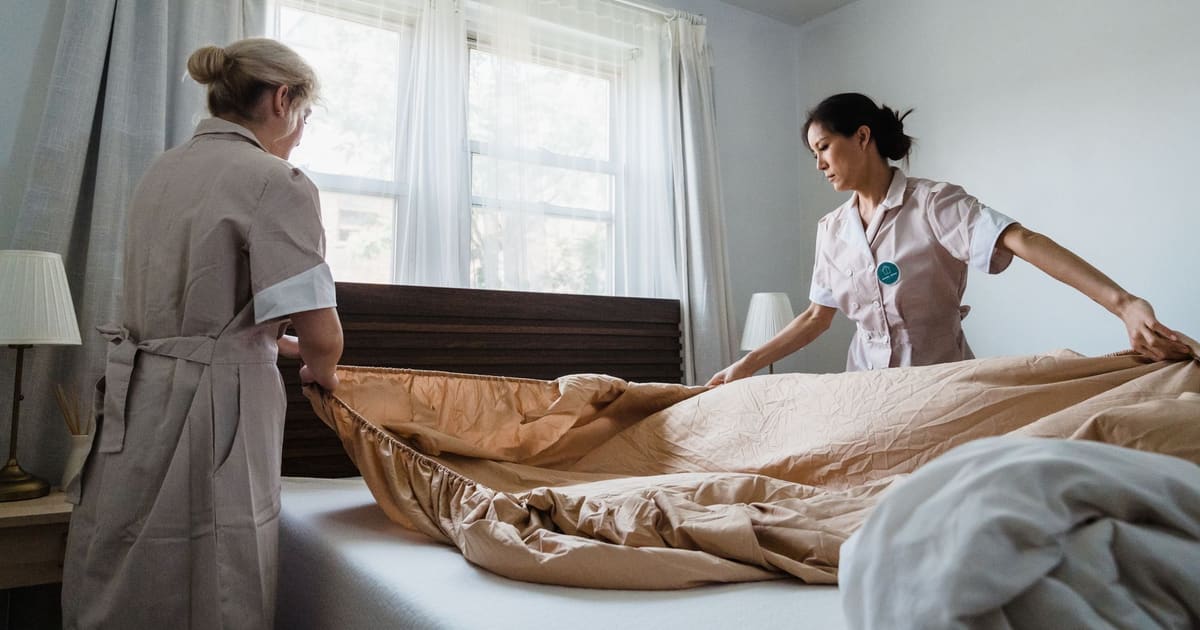
This glossary covers 35 terms you are likely to encounter when researching cleaning services, reading a quote, or evaluating what a service actually provides. Definitions are written for practical use -- clear enough to act on when booking a service or asking follow-up questions.
Service Type Terms
Standard Clean (Maintenance Clean) - A routine cleaning covering the surfaces expected to need regular attention: kitchen counters and stovetop, bathroom scrubbing, vacuuming and mopping floors, dusting reachable surfaces, and emptying trash. Also called a regular clean or recurring maintenance. A standard clean assumes the home is already at baseline and maintains that standard between visits.
Deep Clean - A thorough cleaning that addresses areas a standard clean skips: inside appliances (oven, refrigerator), baseboards, window sills, inside cabinets and drawers, light fixtures, vents, grout lines, and behind furniture. Deep cleans are typically recommended for first-time clients, move-in or move-out situations, or any home not recently professionally maintained. They cost 50 to 100 percent more than a standard visit. See our deep cleaning cost guide for price ranges.
Move-In Clean - A cleaning service performed before a new resident occupies a space, focused on removing traces of prior occupants and any buildup from vacancy. Common targets include inside cabinets, oven, refrigerator, bathrooms, and windows. Move-in cleans may be performed by either the landlord or the incoming tenant. See our move-in cleaning cost guide for what is typically included and what it costs.
Move-Out Clean - A comprehensive cleaning performed when a tenant or homeowner vacates a property. Typically more detailed than a move-in clean because it must satisfy landlord or buyer expectations for deposit recovery or sale. Includes all deep clean components plus any property-specific requirements listed in the lease. See our move-out cleaning checklist for a full scope list.
Post-Construction Clean - A specialized cleaning performed after building, renovation, or remodeling work. Construction sites leave fine plaster dust, paint overspray, adhesive residue, and debris that requires professional-grade vacuuming and chemical treatment beyond standard residential cleaning. Usually performed in phases -- rough clean, detail clean, and final clean -- with different pricing per phase.
Recurring Service - A regularly scheduled cleaning appointment, typically weekly, biweekly, or monthly. Recurring clients usually receive a lower per-visit rate than one-time bookings because the home is consistently maintained and appointments are more predictable. The first visit of a recurring relationship often costs more while the cleaner establishes a baseline standard.
One-Time Cleaning - A single cleaning appointment without a recurring commitment. One-time cleans almost always cost more per visit than recurring service rates. Common use cases include pre-party preparation, post-event cleanup, seasonal deep cleans, and trying a service before committing to a recurring schedule.
Products and Equipment Terms
Green (Eco-Friendly) Cleaning Products - Cleaning products formulated to minimize environmental impact and reduce exposure to harsh chemical compounds. Common attributes include biodegradable ingredients, no bleach or ammonia, fragrance-free or natural fragrance, and cruelty-free formulations. "Green" is not a regulated term, so ask services to name the specific products they use or show you the ingredient disclosure if you have chemical sensitivities.
HEPA Filtration - High-Efficiency Particulate Air filtration. A true HEPA filter captures 99.97 percent of particles 0.3 microns or larger -- dust mite debris, pet dander, mold spores, and pollen. Vacuums with true HEPA filters retain particulates in the filter rather than exhausting them back into the air. Relevant for allergy and asthma sufferers; ask any cleaning service whether their equipment uses true HEPA or merely HEPA-style filtration.
Microfiber - A synthetic fabric made from ultra-fine polyester and polyamide fibers, used for cleaning cloths and mop heads. Microfiber cleans effectively with less chemical product than cotton cloths because its fine fibers physically trap and lift particles. High-quality microfiber also reduces cross-contamination risk when color-coded for use on different surfaces. A professional service using microfiber cloths is a baseline quality indicator.
Steam Cleaner - A cleaning device that heats water to produce high-temperature steam, used to clean and sanitize hard surfaces without chemical cleaners. Steam cleaners are effective on tile grout, hardwood floors (with appropriate equipment), upholstery, and mattresses. Steam temperatures above 212 degrees Fahrenheit kill most bacteria and dust mites on contact. Not appropriate for all surfaces -- heat and moisture can damage certain finishes.
EPA-Registered Disinfectant - A disinfecting product that has been reviewed and listed by the U.S. Environmental Protection Agency as effective against specific pathogens. The EPA List N database identifies disinfectants effective against SARS-CoV-2 and other viruses. Using an EPA-registered disinfectant on a high-touch surface provides a documented level of pathogen reduction that "sanitizing spray" does not imply.
Ask for the product name, not just the category
"We use eco-friendly products" and "we use EPA-registered disinfectants" describe very different things. If chemical exposure, allergies, or pathogen reduction matter to you, ask the service to name the specific products they plan to use before the appointment.
Business and Contract Terms
Bonded - A cleaning company that has purchased a surety bond as a form of financial security against employee theft. If a bonded cleaner steals from a client, the client can file a claim against the bond for compensation. Bonding does not cover accidental damage -- that is covered by liability insurance. Most professional cleaning companies carry both.
Insured (Liability Insurance) - Coverage that protects clients if a cleaning employee accidentally damages property during a visit -- a broken vase, a scratched floor, a stained sofa. Ask for the company's certificate of liability insurance before the first visit. A cleaning company without liability insurance means any accidental damage claim comes out of your own pocket or requires a private dispute. See our bonded and insured cleaning service guide for what to ask.
Independent Contractor vs. Employee - A distinction in how cleaning workers are classified by the company. An employee is on the company's payroll with taxes withheld and workers' compensation coverage. An independent contractor is self-employed and typically not covered by the company's workers' compensation. This matters if a cleaner is injured at your home -- in some states, homeowner liability policies cover this gap; in others, they do not. Ask any service how their workers are classified.
Background Check - A search of criminal history records conducted by a cleaning company before hiring a cleaner who will have access to your home. Most professional agencies conduct background checks; independent cleaners may not. Ask any service or individual cleaner about their screening process. A cleaning company that cannot describe their screening process has likely not conducted one.
Satisfaction Guarantee - A policy by which the cleaning service commits to returning to re-clean any area the client identifies as unsatisfactory, typically within 24 to 48 hours at no additional charge. Not all services offer this. Before booking, ask what specific conditions qualify, how quickly they respond, and whether there are limitations on what areas or situations are covered. See our cleaning service satisfaction guarantee guide for what a genuine guarantee should include.
Specialty Service Terms
Sanitize - The process of reducing the number of bacteria on a surface to a level considered safe by public health standards. Sanitizing does not necessarily inactivate viruses or kill mold spores. Standard house cleaning of kitchens and bathrooms sanitizes high-touch surfaces. The term is less specific than disinfecting and does not require an EPA-registered product.
Disinfect - The use of EPA-registered chemical agents to destroy or inactivate bacteria, viruses, and fungi on surfaces to a level that makes the surface safe for contact. Disinfecting is a stronger intervention than sanitizing. Homes where someone has been seriously ill, medical-grade cleaning contexts, and post-illness cleaning services typically use disinfection protocols.
Flat Rate - A pricing model in which the service quotes a fixed total price for a defined scope of work regardless of how long it takes. Flat-rate pricing is generally preferable for homeowners because it prevents cost overruns on larger or more complex homes. Ask for a flat-rate quote after the service has assessed your home -- a flat rate agreed over the phone without a walkthrough may be revised upward on arrival. See our hourly vs. flat-rate cleaning guide for when each makes more sense.
Hourly Rate - Pricing based on actual time spent cleaning, typically $25 to $75 per cleaner per hour. Hourly rates can be lower on simple, small jobs but expose you to overruns on larger or more cluttered homes. Hourly pricing is most common with independent cleaners rather than agencies.
Initial Deep Clean Fee - A one-time higher-rate first visit that some services charge when beginning a recurring relationship. The purpose is to bring the home from its current condition to a maintained baseline. Once the home is at standard, ongoing maintenance visits are faster and less expensive. Not all services charge an initial fee; ask before booking if you plan to start recurring service.
Supplies Fee - A small add-on charge covering the cleaning products, cloths, and consumables the service brings to your home. Typically $5 to $20 per visit. Some services build this into their rate. If you prefer the service to use your own products (for fragrance sensitivity or allergy reasons), ask whether this fee is waived when you supply the products.
Specialty Cleaning Terms
Grout Cleaning - The process of removing buildup, staining, and mildew from the grout lines between ceramic, porcelain, or stone tiles. Professional grout cleaning uses steam, high-pH alkaline cleaners, and rotary brushes to restore grout color. Often combined with grout sealing to prevent future staining. Distinguishable from a standard bathroom clean, which wipes surfaces without penetrating grout lines.
Dander (Pet Dander) - Microscopic flecks of skin shed by animals with fur or feathers. Pet dander is a common allergen and is smaller and lighter than visible pet hair, allowing it to remain airborne for extended periods. Professional cleaning with HEPA-filtered equipment is more effective at reducing dander than standard vacuuming. Cleaning services specializing in pet-friendly homes typically use HEPA equipment and enzyme-based products that break down pet proteins.
Mold Remediation - The process of identifying, containing, and removing mold growth from a building. Mold remediation is distinct from routine cleaning and is regulated in most states. Professional mold remediation requires containment barriers to prevent spore spread, HEPA air scrubbers, and disposal of porous materials that cannot be cleaned. Standard cleaning services do not perform mold remediation. If a cleaning service finds significant mold during a routine visit, they should stop and refer you to a licensed remediator.
Enzyme Cleaner - A cleaning product that uses biological enzymes to break down organic compounds -- pet urine, blood, food residue, and other protein-based stains. Enzyme cleaners work over time as the enzymes digest the organic material rather than masking it. Effective on stains that standard cleaners leave behind because they address the molecular source of the odor or discoloration, not just the surface layer.
Verify bonded, insured, and background-checked -- every time
These three protections are the difference between a professional cleaning company and an unvetted individual with a mop. Ask for the certificate of insurance and confirm the company's background check process before a cleaner enters your home. See how to choose a cleaning service for the complete vetting checklist.
VOC (Volatile Organic Compound) - Carbon-based chemicals that vaporize at room temperature and contribute to indoor air pollution. Many conventional cleaning products -- ammonia-based glass cleaners, certain disinfectants, air fresheners -- release VOCs. Prolonged exposure to high indoor VOC levels is associated with respiratory irritation and headaches. Choosing fragrance-free or Green Seal-certified cleaning products reduces indoor VOC exposure during and after a cleaning visit.
For pricing context on any service mentioned above, see the cleaning prices 2026 index with ranges for every common service type.
Frequently asked questions
What is the difference between a standard clean and a deep clean?
A standard clean covers routine maintenance surfaces -- kitchens, bathrooms, floors, dusting, and trash. A deep clean adds scrubbing baseboards, cleaning inside appliances, washing windows, grout cleaning, and addressing buildup that a maintenance clean skips. Deep cleans cost 50 to 100 percent more than a standard visit and are typically recommended for first-time clients or homes not recently professionally cleaned.
What does bonded and insured mean for a cleaning service?
Bonded means the cleaning company has purchased a surety bond that provides compensation if an employee commits theft. Insured means the company carries general liability insurance covering accidental damage during a cleaning visit. Hiring a bonded and insured service protects you if a cleaner breaks something or if personal property goes missing. Verify both by asking the company for their certificate of insurance.
What is a HEPA filter and why does it matter for cleaning?
HEPA stands for High-Efficiency Particulate Air. A HEPA-certified filter captures 99.97 percent of airborne particles 0.3 microns or larger, including dust mite debris, pet dander, pollen, and mold spores. Vacuums and air purifiers with true HEPA filtration are meaningfully better for allergy and asthma management than those without. Ask cleaning services whether their vacuums use true HEPA filters if allergies are a concern.
What is the difference between a flat rate and an hourly rate for cleaning?
A flat rate is a fixed price for a defined scope of work regardless of how long it takes. An hourly rate charges based on actual time. Flat rates protect you from cost overruns and are usually preferable for recurring service where the scope is predictable. Hourly rates can be lower for small, simple jobs. Ask for a flat-rate quote after the service has assessed your home.
What does sanitize mean compared to disinfect or clean?
Cleaning removes visible dirt and debris by physical action. Sanitizing reduces the number of bacteria to a safe level as defined by public health standards. Disinfecting destroys or inactivates a broader range of pathogens, including viruses, using EPA-registered disinfectants. Most standard house cleaning sanitizes high-touch surfaces. Disinfection protocols are used in post-illness or medical-setting contexts and typically cost more.
What is a satisfaction guarantee from a cleaning service?
A satisfaction guarantee means the service will return to re-clean any area you are not satisfied with, typically within 24 to 48 hours of the original visit. Not all services offer this. Before booking, ask specifically what the guarantee covers: which areas, how quickly they return, and whether there is a charge for the re-clean. A guarantee is worth less if there are significant restrictions on what qualifies.